Europe is burning, and we all started the fire.
Well, someone else will have *actually* started the fire (most wildfires are started by people, but not necessarily always on purpose). But climate change is something we’ve all got a hand in, and if this hadn’t been such a hot summer, the ground wouldn’t have been as dry and the fires wouldn’t have spread as far and wide as it has.
To be fair, it’s not the only factor - changes in agriculture (i.e., fewer people farming) means that land that would previously have been plowed is now full of dry vegetation that is ripe for catching fire and there is a particularly dense bit of monoculture forest in Southwest France that causes the fire to spread quickly (this France 24 clip explains it well). But without climate change, it wouldn’t have been so dry and it wouldn’t have been so bad.
By current estimates, these are the largest wildfires France has ever seen, and on track to be so in Spain too. They have objectively been huge.
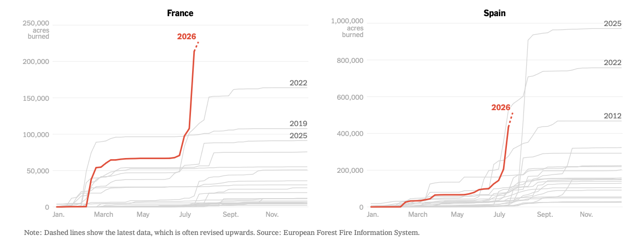
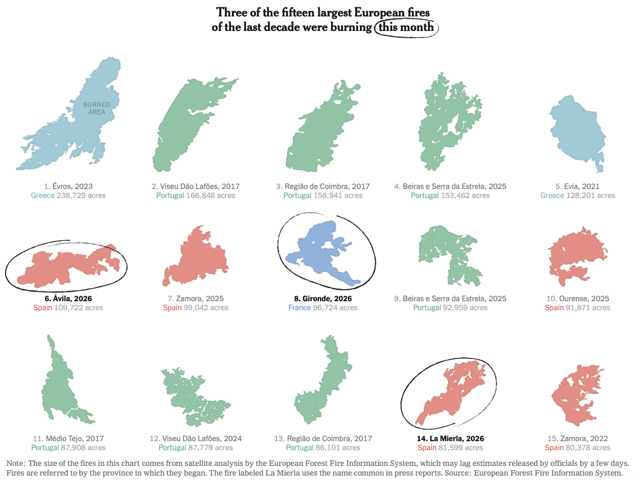
Courtesy of the New York Times
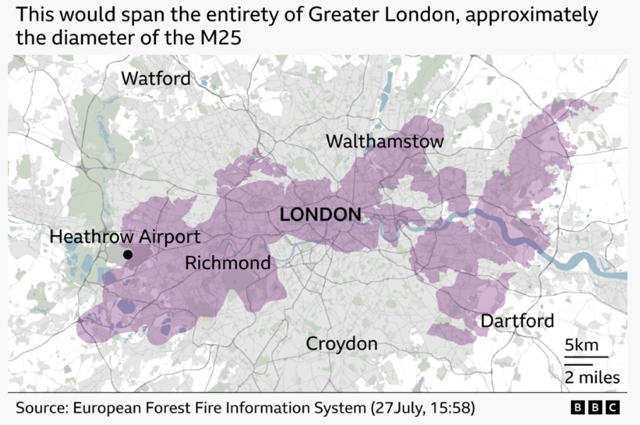
90,000 people were displaced by the fire outside Madrid. It was so large that it would span the entirety of London. And the hottest month of the year is yet to come - August is going to be even more devastating for so many of these communities.
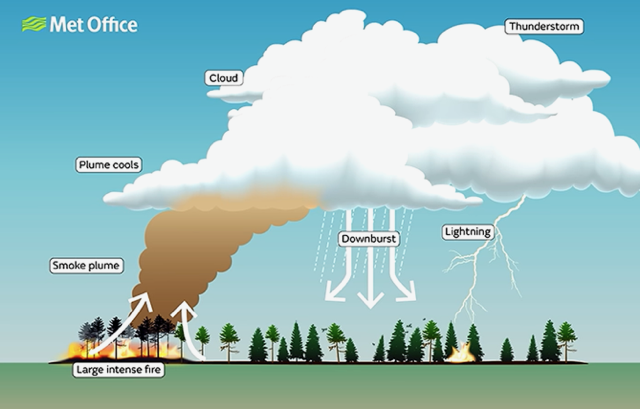
And to top it all off, the fire in France has been burning so hot that it has been making it’s own fire clouds to create a literal fire storm that NASA once called a “fire-breathing dragon of clouds”.
And we mustn’t be so crass as to dismiss this as European problem. Brexit aside, we are still very much neighbours and our position on the continental seaboard remains firmly the same.
More than half of England is in drought. Now I’ve always heard that and thought “oh yeah, hasn’t rained in a while” but never really thought about what that actually meant. The Environment Agency (who declare droughts in the UK) put this in their announcement which I thought explained it quite well.

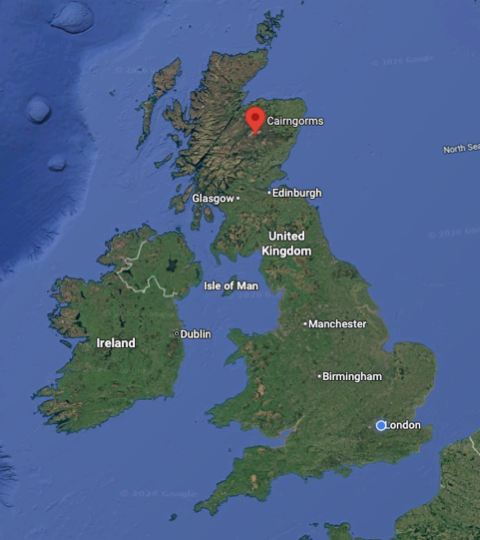
Arthur’s Seat in Edinburgh was on fire last week and moorland around Manchester has been burning for nearly a fortnight. The Cairngorms (in the Highlands!! See the map below for emphasis on just how North this is) also burned for nearly two weeks earlier this month. This is happening here too, and it’s only going to get worse as the world gets hotter.
And of course another side effect of a hotter world is rising sea levels, but have looked at this map to check when the area you live in is predicted to start regularly flooding?
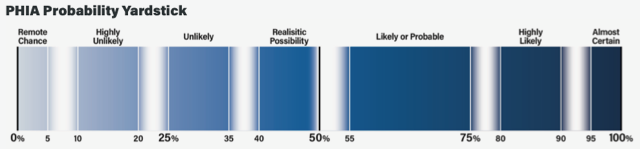
And none of this operates in a bubble. It has a direct impact on our food supplies, national security (see UK Government paper and below), and the basics that we rely on to survive.
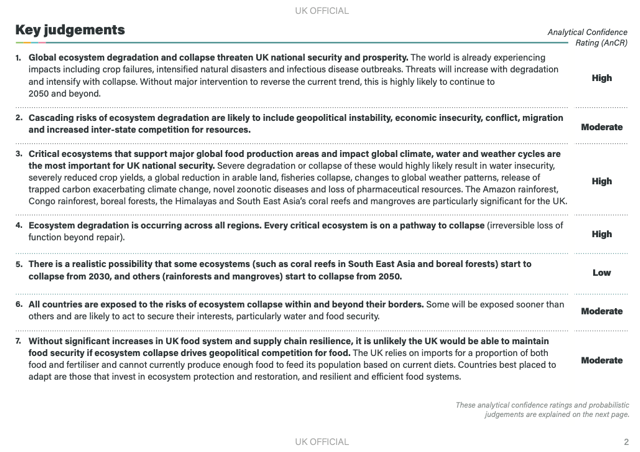
(As an aside, this probability yardstick is brilliant and I think everyone should use it)
And to wrap this note up, it’s all about to manifest again as the Rhine, yet another critical global waterway, dries up and traffic slows (which is a story I suspect we’ll be hearing more of in coming weeks).
This feels like an opportune time to point out that three of the other busiest waterways in the world are also currently closed i.e., the Strait of Hormuz (Iran/US conflict), the Bab al-Mandeb Strait (Houthi rebels - although ships returning) and the Black Sea ports (Russia/Ukraine war).
The Rhine is the jugular vein of Western European industrial production, with a whole host of industrial infrastructure propped up along it, as below:
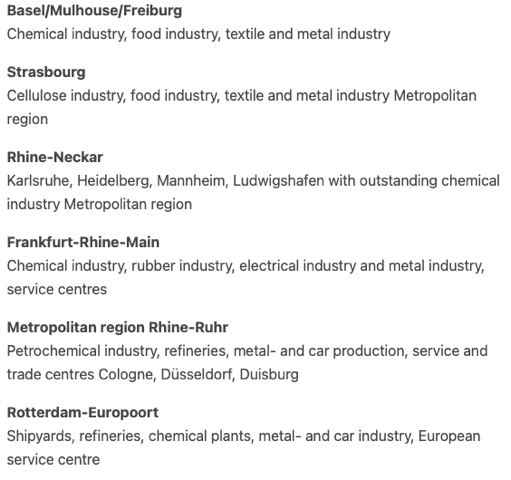
Courtesy of the International Commission for the Protection of the Rhine
The Rhine feeds all of these industries and is one of the busiest waterways in the world.
But it needs rain! And since there’s not been loads of that, it’s becoming shallower, which makes it harder for vessels to transit through. The key chokepoint is by the town of Kaub, where vessels needs a “navigable depth” of 1.5m to pass through fully loaded. It’s currently at 30cm and there’s no rain expected until the end of next week. This could be a problem that develops.
I’d keep an eye on it.
RH